Taxes Were Never Supposed to Come Out of Your Paycheck
In 1913, modern income tax was sold as a 1% levy strictly on the top 1%. Then payroll withholding turned everyday workers into government collection agents.
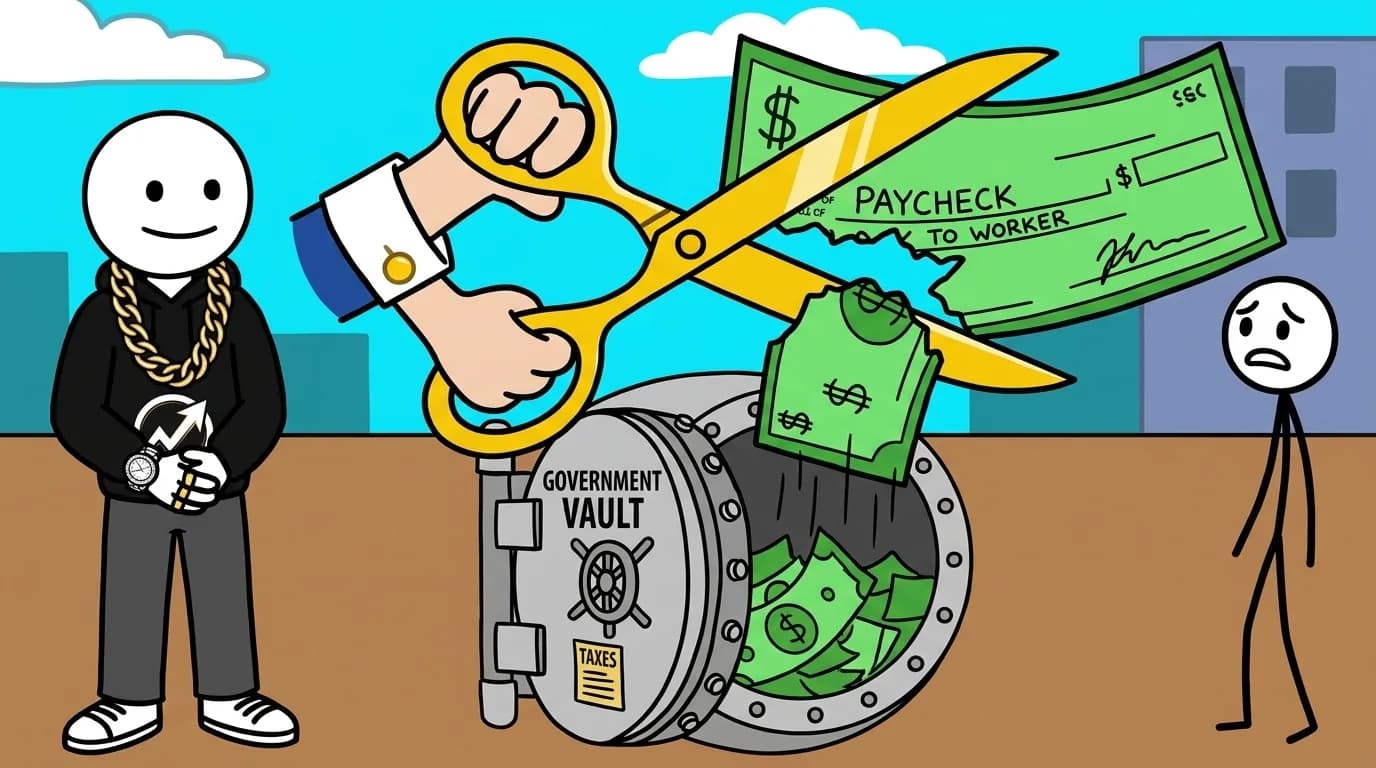
- When the 16th Amendment passed in 1913, income tax was advertised as a tiny 1% tax on the wealthiest 1% of the population.
- Over 99% of ordinary working Americans paid exactly zero dollars in federal income tax in 1913.
- Automatic payroll withholding was enacted in 1943 during World War II as a temporary wartime measure to make tax extraction invisible.
- Today, salaried W-2 workers pay taxes first and live on what remains, while business and asset owners deduct expenses first and pay taxes last.
- The only legal path to lowering tax drag is shifting from pure wage labor to asset ownership and capital gains.
Look closely at your paystub on payday. Compare the gross earnings figure at the top with the net deposit that actually lands in your checking account. Anywhere from twenty to thirty-five percent of the value you created evaporated before you ever had the chance to touch, save, or invest it.
Most people accept this as an ancient, unavoidable reality of adult life. We shrug and call it the cost of living in society. But taxes were never supposed to come out of your paycheck. In fact, for most of modern history, taking taxes directly from a worker's pay was considered completely unacceptable.
The 1% promise that lasted only a decade
For the first 137 years of United States history, there was no permanent federal income tax on individual labor. The federal government funded its operations through excise duties, tariffs on imported goods, and sales of public lands.
When the 16th Amendment was ratified in 1913, politicians made a solemn promise: the tax would apply only to the ultra-rich. It was pitched as a targeted 1% levy on incomes exceeding three thousand dollars for single filers, roughly ninety-five thousand dollars in today's purchasing power.
At a time when the average American laborer took home around eight hundred dollars a year, more than 99% of the population paid zero federal income tax. The original Form 1040 was three pages long, including the instruction booklet.
“If citizens had to write a manual check for their full tax bill every month, the tax code would be rewritten by Friday afternoon.”
1943: The wartime trick that never went away
Even as income tax rates gradually rose, citizens still had to write a single physical check to the government once a year on March 15. That annual payment created intense civic friction. Taxpayers physically saw and felt thousands of dollars leaving their hands, which forced politicians to justify every dollar of public spending.
Then came World War II. The government required billions of dollars instantly, and federal planners worried that citizens would refuse or fail to save enough cash to pay massive annual tax bills during wartime.
In 1943, Congress passed the Current Tax Payment Act. Under the guidance of economists like Milton Friedman, the government introduced automatic payroll withholding. Employers were converted into unpaid tax collection agents, confiscating money from worker paychecks before employees ever laid eyes on it.
It was passed as an emergency wartime measure. The war concluded in 1945. But the automatic deduction machine never left. By taking the money before workers receive it, governments eliminated the psychological pain of taxation, allowing rates to climb without provoking mass rebellion.
The brutal tax bracket creep
Notice how the tax burden fundamentally shifted away from wealthy asset accumulators and landed squarely on the backs of salaried wage earners:
- 1913 exemption threshold
- $3,000 (? $95,000 in today's dollars)
- 1913 population paying income tax
- Less than 1%
- 1913 base tax rate
- 1.0%
- Modern median worker tax deduction (Fed + FICA + State)
- ? 25% to 32% extracted automatically
- Asset owner long-term capital gains rate
- 0% to 20% (deferred until sale)
Employees pay taxes on gross income before buying food or housing. Business owners pay taxes only on net profit after valid business expenses.
Four ways to reclaim control from the tax trap
- Maximize tax-advantaged accounts: Utilize employer-sponsored 401(k)s, traditional or Roth IRAs, and Health Savings Accounts (HSAs) to legally shelter capital from immediate tax erosion.
- Build business and freelance cash flow: Creating an LLC or sole proprietorship allows you to deduct legitimate operating expenses like software, hardware, and home office costs before calculating taxable profit.
- Prioritize asset appreciation over salary raises: Holding assets for more than twelve months triggers long-term capital gains rates, which are significantly lower than marginal income tax brackets.
- Shift from wage earner to asset owner: You cannot build generational wealth purely on after-tax wages. Deploy your surplus savings into productive, compounding assets that benefit from favorable tax laws.
The end
Found this useful? The fastest way to support the page is to share the reel with one person who needs it.
The Sunday Money Note
1 mindset shift and 3 actions to take that week, in your inbox every Sunday morning. A 5-minute read that starts your week with clarity instead of the Monday dread.