Why You Never Truly Own Your Home
We are told that paying off a 30-year mortgage brings absolute freedom. In reality, you simply trade a bank loan for perpetual government rent.
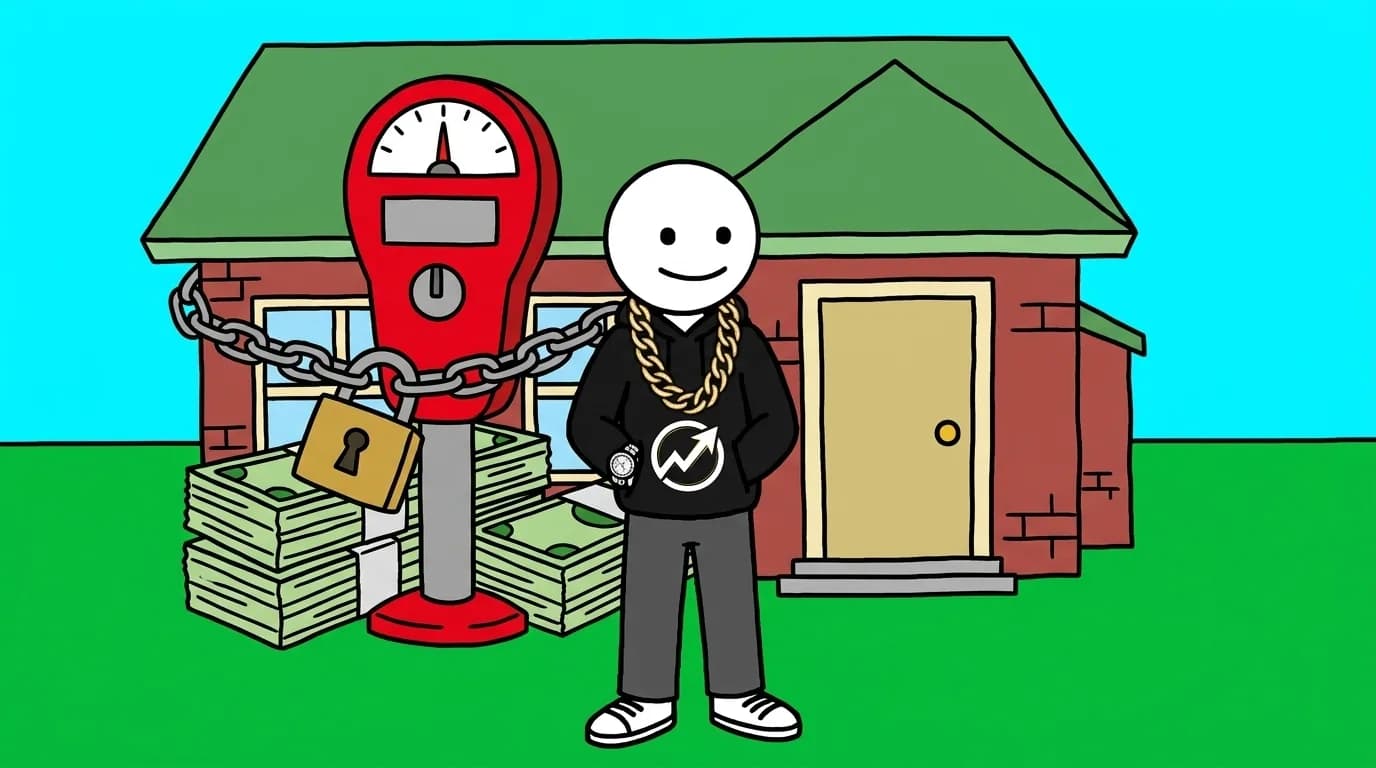
- Most homeowners believe that paying off the mortgage deed provides complete, untouchable ownership.
- Property taxes turn every home into a perpetual lease from the local municipality.
- Historically, property taxes payable only in cash were introduced to force self-sufficient homesteaders into corporate wage labor.
- Failing to pay annual property taxes allows local governments to seize and auction your home, regardless of whether you owe the bank zero dollars.
- Real financial security requires building cash-flowing assets that cover recurring municipal carrying costs automatically.
Imagine the milestone moment millions of workers spend four decades chasing. You write the final mortgage check to the bank. You frame the title deed on your office wall. You throw a celebration in the backyard and declare to your friends and family that you finally own your home free and clear.
You believe that nobody can ever kick you off your land. But try conducting a simple experiment next January. Do not pay your annual property tax bill. Ignore the friendly reminders. Ignore the official municipal notices. Within twelve to twenty-four months, a government sheriff will arrive at your front door, post an eviction notice on your porch, and auction your home on the county courthouse steps to the highest bidder.
The uncomfortable truth hits quickly: you never truly owned the house. You merely paid off the mortgage company so you could rent the land from the state for the rest of your life.
The colonial trick to force self-sufficient families into wage labor
To understand why modern real estate functions like a perpetual subscription, you have to examine the origin of property taxation. In early agrarian and colonial economies, ruling authorities ran into a frustrating structural problem: self-sufficient citizens.
A family with a modest plot of fertile land, a timber cabin, a vegetable garden, and a few livestock did not need the government or industrial corporations. They grew their own food, cut their own firewood, traded goods with neighbors through barter, and lived largely outside the cash economy. Because they had no debts and no mandatory cash expenses, they had zero reason to take difficult, low-paying factory jobs or work for commercial wages.
To colonial administrators and early industrial leaders, self-sufficient homesteaders were economically unproductive. The solution was brilliant and ruthless: impose an annual property tax on land that had to be paid exclusively in government-issued paper currency.
It did not matter if you produced abundant crops and lived in complete peace. If you could not produce hard currency every twelve months, your ancestral farm was confiscated. Suddenly, independent landowners were forced to leave their fields, enter commercial markets, and trade their daily hours for cash wages just to pay the annual fee to remain on their own soil.
“If you must pay an annual fee to the state under threat of eviction, you do not own the property. You hold a lifetime lease with heavy maintenance obligations.”
The six-figure cost of a 'paid-off' home
Most financial plans celebrate the day a thirty-year mortgage hits zero. What they routinely overlook is that the local municipality's appetite never stops growing. As home values are reassessed higher every year, your property tax obligation steadily compounds throughout your retirement.
- Home market value at mortgage payoff
- $450,000
- Bank mortgage balance remaining
- $0 (Paid in full)
- Initial annual property tax rate (1.8%)
- $8,100 per year
- Average annual municipal tax escalation
- 3.5% per year
- Total property taxes paid over 30 years of retirement
- ≈ $418,500
- Mandatory insurance and structural maintenance reserve
- ≈ $270,000
- Total cash required to keep a 'free' home over 30 years
- ≈ $688,500
Even with zero mortgage debt, remaining in a typical suburban home requires nearly $700,000 in liquid cash over thirty years just to satisfy government taxes and baseline maintenance.
When you add up thirty years of compounding municipal taxes, insurance premiums, and municipal sewer fees, you end up paying more than the original purchase price of the home just to keep the government from putting a lien on your front door.
How to insulate your life from perpetual housing taxes
Escaping this reality does not mean you should avoid buying a home or abandon all property. It means stripping away the romantic illusion of emotional ownership and approaching your primary residence with strategic discipline.
- Calculate your perpetual baseline cost: Never look only at principal and interest. Calculate your unbonded carrying cost (taxes, insurance, mandatory maintenance) to discover what your home actually costs to inhabit when debt-free.
- Build a dedicated property tax asset fund: Instead of relying on future job income or volatile social security checks, dedicate an income-producing asset (such as dividend-paying index funds or Treasury ladders) whose monthly yield covers your property taxes automatically.
- File for all available statutory exemptions: In many states and counties, filing for a primary residence homestead exemption locks in annual assessment caps, preventing sudden double-digit tax hikes.
- Avoid over-improving in high-tax jurisdictions: Pouring hundreds of thousands of dollars into structural additions directly invites municipal assessors to raise your annual tax bill for decades to come.
- Prioritize cash-flowing assets over residential equity: Trapping eighty percent of your life savings in illiquid home equity leaves you house-rich and cash-poor. Deploy capital into assets that feed your checking account every month.
The end
Found this useful? The fastest way to support the page is to share the reel with one person who needs it.
The Sunday Money Note
1 mindset shift and 3 actions to take that week, in your inbox every Sunday morning. A 5-minute read that starts your week with clarity instead of the Monday dread.