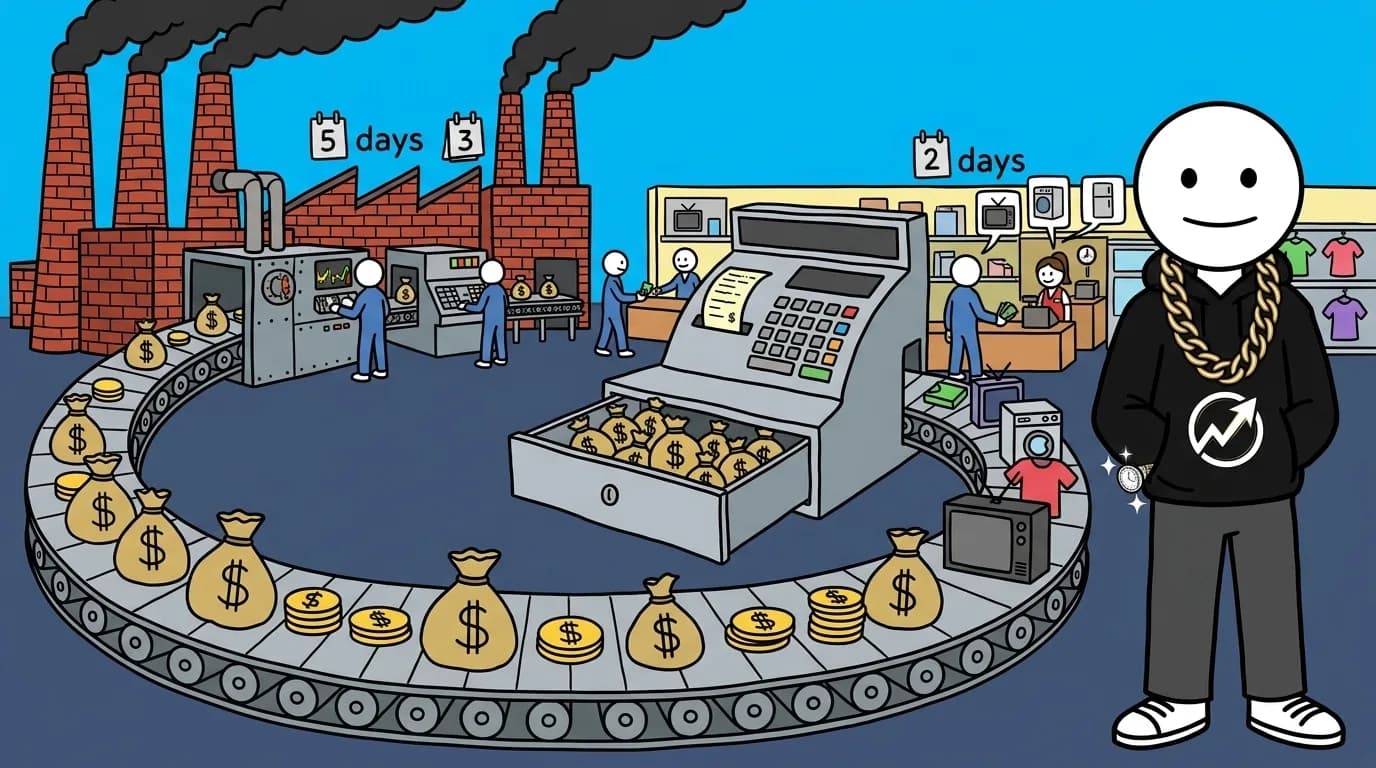
Why Companies Do Not Pay You Once a Month by Accident
Day laborers used to get paid at sunset for their work that day. Modern payroll changed the rules to hold your cash hostage.

- Historically, workers were paid at sunset every single day for the exact labor completed.
- During the industrial revolution, companies switched to paying weeks in arrears, effectively forcing employees to give interest-free short-term loans to their bosses.
- Delayed pay cycles force households to rely on credit cards and overdraft lines to bridge recurring living expenses.
- Large employers earn millions every year simply by investing unpaid payroll in overnight treasury markets.
- Building a multi-month cash buffer breaks the psychological leash of the monthly paycheck.
You wake up on the first day of the month, commute to work, finish eight hours of focused labor, and head home. You created measurable value and generated revenue for the company today. But you will not see a single cent of that compensation for another thirty days.
Most people consider this completely normal. It is just 'the payroll cycle.' We grow up assuming that working thirty days in arrears is an inevitable law of economics. But companies do not pay you once a month by accident. It is one of the most profitable structural designs in corporate history.
The lost tradition of sunset wages
For thousands of years across human civilization, day laborers, farmhands, and craftspeople were compensated at the end of every shift. When the sun went down, the employer reached into his pouch and handed you coins for that exact day of work.
In fact, ancient legal codes and historical labor records explicitly condemned withholding wages overnight. If you spent your energy building a wall or harvesting grain from dawn to dusk, you required that money that evening to buy bread for your family.
There was also a hidden psychological power in daily pay: total labor mobility. If a foreman was abusive, unsafe, or dishonest, a worker could simply walk away at sunset and never return. There was zero sunk labor holding them hostage.
“When a company holds four weeks of your unpaid labor, you are not just an employee. You are an interest-free lender to your boss.”
The psychological trap of working in arrears
As massive factories and corporate hierarchies emerged during the Industrial Revolution, corporate accountants noticed an enormous advantage: delaying payroll.
By holding back two, three, or four weeks of compensation, companies fundamentally tilted the balance of leverage. At any given moment on the calendar, your employer owes you hundreds or thousands of dollars of work that has already been delivered.
If you decide to quit abruptly on a Tuesday afternoon, your final paycheck is tied up in corporate bureaucracy and payroll cycles. That delay creates hesitation. It turns workers into compliant, cautious employees who cannot afford to rock the boat because their household lives thirty days behind their actual output.
The million-dollar corporate float
Beyond psychological control, there is a brutal financial reason companies love monthly payroll: the cash float. When an enterprise delays paying its workforce, that capital remains in corporate interest-bearing accounts.
- Monthly payroll held in arrears
- $25,000,000
- Annual Treasury float yield (5%)
- 5.0% annualized
- Corporate interest income earned on float
- ? $1,250,000 per year
- Employee credit card interest bridging gap (24%)
- ? $450 per household yearly
Corporations collect risk-free interest on delayed worker pay while employees borrow on high-interest credit lines to bridge mid-month groceries.
A mid-sized corporation with five thousand workers holding twenty-five million dollars in monthly payroll can earn over one million dollars annually simply by parking that unpaid labor in overnight Treasury bills or institutional money markets.
Four ways to escape the delayed pay trap
- Build a one-month living buffer: The day your bank account holds thirty days of baseline living expenses, you break the arrears trap. You begin spending last month's money, permanently eliminating mid-month payroll anxiety.
- Never let earned capital sit idle: Ensure direct deposits immediately sweep surplus funds into high-yield accounts, index funds, or debt reduction the morning payday arrives.
- Decouple survival from a single monthly transfer: Build freelance retainers, consulting fees, digital sales, or dividend streams that deposit capital at irregular intervals throughout the month.
- Treat your labor as an equity trade: Stop viewing your salary as a benevolent gift from an employer. It is a transactional contract. Reinvest your surplus earnings into assets that work for you around the clock.
The end
Found this useful? The fastest way to support the page is to share the reel with one person who needs it.
The Sunday Money Note
1 mindset shift and 3 actions to take that week, in your inbox every Sunday morning. A 5-minute read that starts your week with clarity instead of the Monday dread.