Why Companies Gave You Weekends Off
In 1926, Henry Ford cut the workweek to five days. It was not an act of corporate kindness: it was the birth of the modern weekend consumer.
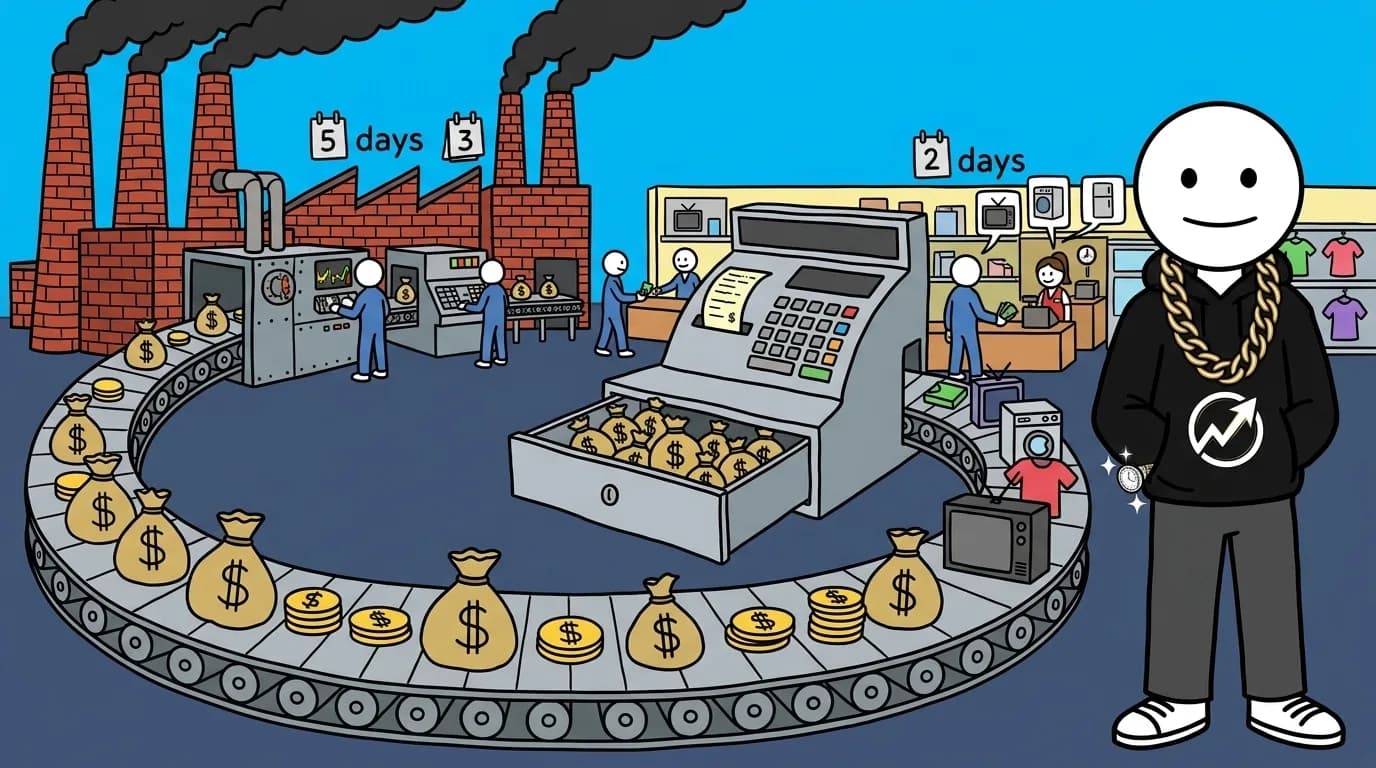
- Before 1926, factory employees worked six days a week with only Sunday reserved for church and physical recovery.
- Henry Ford popularized the two-day weekend because workers trapped inside factories six days a week had zero time to spend money or buy cars.
- The modern consumer economy depends on a loop: five days making products, two days spending paychecks to buy them back.
- What you do Monday through Friday pays your rent. What you do with Saturday and Sunday determines whether you ever become financially free.
Every Friday afternoon, millions of workers experience the exact same sensation: pure relief. The alarm clocks are turned off, the laptops are shut, and the weekend begins. We treat Saturday and Sunday as a hard-won victory of modern labor, a generous reward from employers designed to let us rest, recover, and recharge for Monday morning.
Most people believe big corporations gave us two days off out of basic human kindness. But corporate boards do not make multi-billion dollar scheduling changes out of benevolence. The two-day weekend was not invented to give you rest. It was engineered to turn you into a customer.
The 1926 assembly line problem
At the turn of the twentieth century, the typical American industrial worker spent six days a week on the factory floor, often clocking ten to twelve hours each day. Sunday was the sole day of rest, almost entirely consumed by church services, chores, and basic physical recovery.
Then the Industrial Revolution reached peak efficiency. In 1913, Henry Ford perfected the moving assembly line. Suddenly, Ford Motor Company could produce a Model T car every ninety-three minutes. Soon, factories across America were churning out consumer goods: automobiles, radios, clothing, and household appliances: at speeds humanity had never seen before.
Industrialists quickly ran into an unprecedented crisis of mass production. It was not a supply problem. It was a consumption problem. Who was going to buy all these finished goods?
If factory employees spent six days a week locked behind machinery from dawn until dusk, they had zero time to drive cars, zero time to visit department stores, and zero opportunities to spend the cash they earned. Ford understood this fundamental economic reality before anyone else: mass production requires mass consumption, and mass consumption requires free time.
“People with a five-day week will consume more than people with a six-day week. It is high time to rid ourselves of the notion that leisure for workmen is either lost time or a class privilege.”
The closed-loop consumer trap
In September 1926, Ford officially shut down his factories on Saturdays and Sundays, instituting the 40-hour, five-day workweek without cutting daily wages. The rest of corporate America soon followed suit. Within a generation, the weekend became codified into federal law through the Fair Labor Standards Act of 1938.
The strategy worked brilliantly. Giving workers forty-eight consecutive hours of free time created the modern entertainment, travel, and leisure industries. Workers were paid on Friday, and by Sunday evening, a massive portion of that paycheck had been recycled straight back into corporate balance sheets through gas stations, shopping centers, restaurants, and movie theaters.
The economic cycle was complete: five days you produce goods for companies, and two days you spend your earnings buying those goods back.
- Weekly hours worked for employer (Mon to Fri)
- 40 hours
- Weekly waking hours available on weekends (Sat and Sun)
- 32 hours
- 40-year career weekend waking hours
- 66,560 hours
- Full-time work equivalent of 40 years of weekends
- ≈ 32 full years of labor
A typical 40-year career gives you over 66,000 waking weekend hours. How you allocate them decides your net worth.
From weekend consumer to weekend owner
None of this means rest is bad. Sleep, health, and family time are essential. The danger is unconscious consumption: viewing Saturday and Sunday solely as an escape hatch to burn through Friday's paycheck on fleeting retail dopamine.
The wealthiest people in the world do not view weekends as an escape from work. They view weekends as their private window of freedom: uninterrupted hours when nobody is demanding their time, sending urgent Slack pings, or scheduling corporate meetings.
Four ways to reclaim your forty-eight hours
- Audit your weekend spending leaks: Review your bank transactions from the last three weekends. Notice how much money vanishes between Friday 6 PM and Sunday midnight on convenience, dining out, and impulse shopping.
- Lock down Saturday morning: Protect 8:00 AM to 12:00 PM every Saturday for asset building. Use those four quiet hours to study investments, acquire high-income skills, or build a scalable side project before opening social media or running errands.
- Switch from consumer to creator: Shift at least five weekend hours toward producing value instead of consuming it. Write content, research index funds, code software, or draft blueprints for an independent income stream.
- Measure wealth in runway, not toys: Stop rewarding a tough workweek with retail purchases that increase your liabilities. True rest comes from knowing you have twelve months of living expenses banked, not from buying new clothes you do not need.
The end
Found this useful? The fastest way to support the page is to share the reel with one person who needs it.
The Sunday Money Note
1 mindset shift and 3 actions to take that week, in your inbox every Sunday morning. A 5-minute read that starts your week with clarity instead of the Monday dread.