Banks Do Not Want Cash to Disappear for Your Convenience
Tapping a plastic card feels seamless. But behind every contactless beep lies a toll booth that slowly drains local commerce.
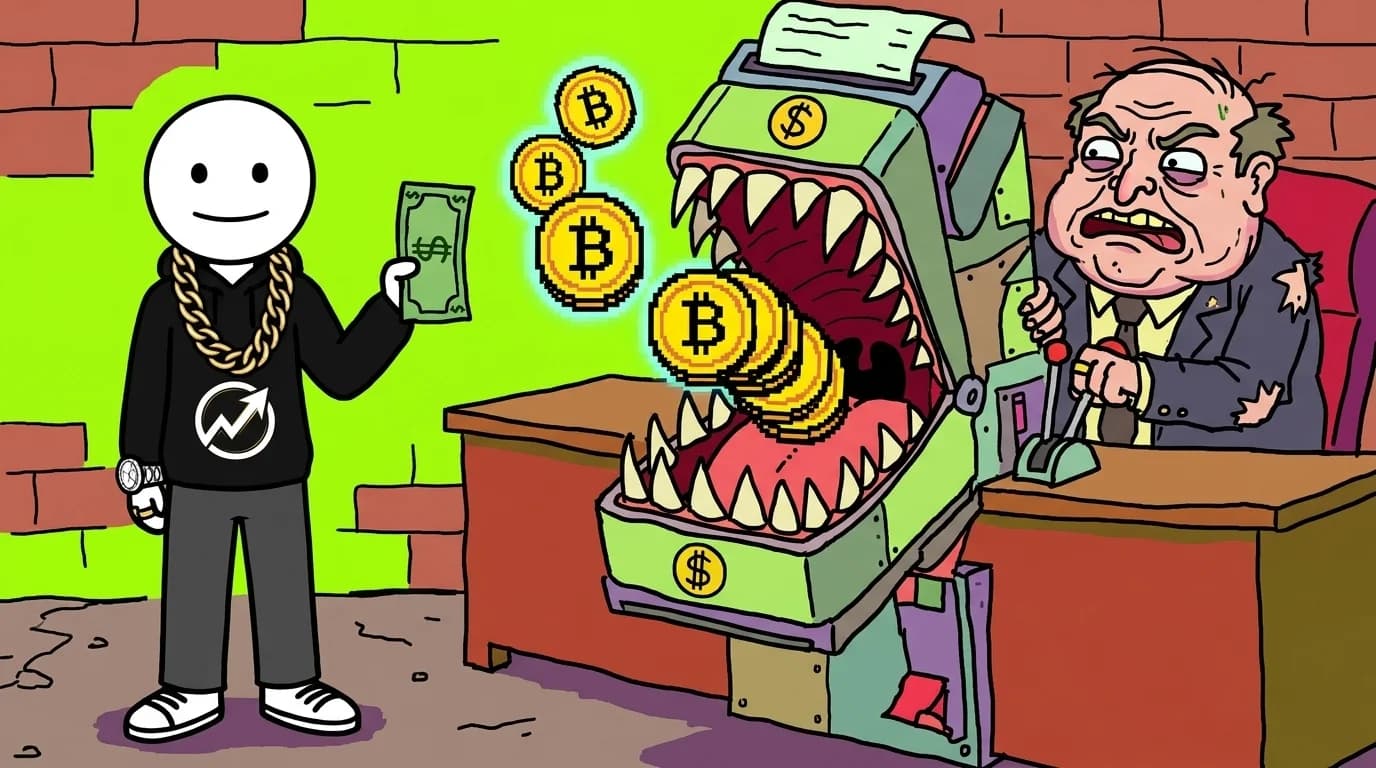
- A physical fifty dollar bill can circulate among local shops indefinitely while retaining its total face value.
- Digital payments attach a silent 1.5% to 3.5% swipe fee to every single transaction.
- After thirty digital transactions, banks and payment processors take a massive cut of that original fifty dollars.
- Convenience is real, but it doubles as a surveillance toll booth on everyday human interaction.
We are told that physical currency is dirty, clunky, and outdated. Digital wallets and contactless cards promise a frictionless utopia where nobody carries coins.
But banks and payment processors did not spend billions lobbying for a cashless world to make your checkout five seconds faster.
The fifty-dollar experiment
Imagine a physical fifty dollar bill. You use it to pay the local baker. The baker spends it at the butcher. The butcher hands it to the hardware store owner.
After thirty transactions across the neighborhood, that fifty dollar bill is still worth fifty dollars. Every single cent stayed inside the local community.
“Cash is peer-to-peer liberty. Digital payments require permission and pay a toll every step of the way.”
The silent toll booth on every tap
Now replay that exact same scenario with digital credit and debit cards.
Every time a customer taps a card, payment processors skim an interchange fee of 2% to 3.5% off the merchant.
- Original bill value
- $50.00
- Value after 30 cash purchases
- $50.00 in the community
- Average bank swipe fee
- 2.5% per transaction
- Value left after 30 card taps
- ≈ $23.40 (Banks take $26.60)
More than half of the money vanishes into financial processor fees without a single extra good created.
Why control follows the fee
Transaction fees are only half the prize. When all money is digital, banks hold total visibility over every coffee you buy, every donation you make, and every journey you take.
When your funds exist only as digits on a private server, accessing your own livelihood is a privilege that institutions can freeze with a single policy update.
How to preserve your financial privacy
- Keep physical cash in rotation. Pay local small businesses, barbers, and markets in paper cash so they keep 100% of their revenue.
- Maintain an emergency offline buffer. Always hold two to three weeks of basic living expenses in cash outside the banking grid.
- Inspect processing markups. Notice how merchants are increasingly charging cash discounts or credit surcharges to survive swipe fees.
- Separate savings from daily transaction accounts. Never leave your entire net worth linked directly to payment apps and digital wallets.
The end
Found this useful? The fastest way to support the page is to share the reel with one person who needs it.
The Sunday Money Note
One idea. One story. One thing to do this week. The research behind the reels, straight to your inbox. No spam, no hype.